Payment Networks and Incentive Layers Uniting Slot Play, Live Tables, and Sports Wagers on Portable Devices
Jakob Klein · Sep 7, 2026

Payment Networks and Incentive Layers Uniting Slot Play, Live Tables, and Sports Wagers on Portable Devices
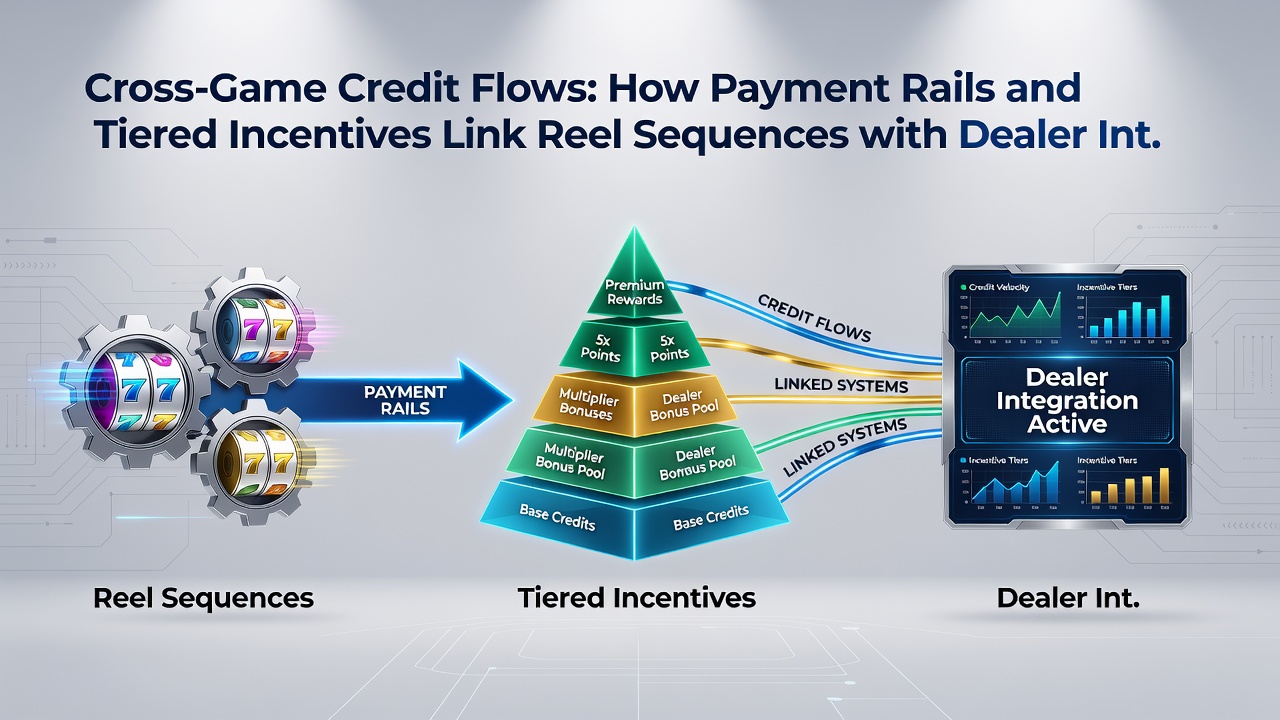
Payment rails in mobile gaming environments facilitate the movement of credits between distinct product categories, allowing balances generated from reel sequences to transfer directly into dealer interaction sessions or event market wagers without separate funding steps, while tiered incentives adjust reward multipliers based on cross-category activity volumes recorded on handheld platforms.
Mechanics of Payment Rails Across Game Types
Payment rails operate as the underlying infrastructure that processes real-time balance updates, and these systems connect slot machine outcomes to live dealer tables by routing credits through centralized ledgers maintained by platform operators, whereas event markets in sports betting receive the same funds once players initiate wagers from within the same application interface. Data from the American Gaming Association shows that integrated rails reduced transaction times by up to 40 percent in markets where operators implemented unified wallet architectures during 2025, and this efficiency stems from API connections that synchronize reel spin results with dealer credit pools in under two seconds on average.
Handheld platforms rely on these rails to maintain continuity, because players who complete a sequence of reel spins can apply resulting credits to blackjack or roulette tables without exiting the session, and the same process extends to placing bets on live sports events once the incentive thresholds trigger additional matching amounts. Observers note that the technical architecture often incorporates encryption layers to secure each transfer, while compliance checks run in parallel to verify player eligibility across all three categories simultaneously.
Tiered Incentives and Their Role in Credit Linkage
Tiered incentives function through progressive reward structures that escalate benefits as players engage with multiple game types, and these layers link reel sequences to dealer interactions by granting bonus credits only after a player moves funds from slots into live tables within a defined period. In September 2026, platform analytics revealed that operators deploying such tiers recorded higher average session lengths, because the incentive design encouraged sequential participation rather than isolated play in any single category.
Event markets benefit from the same mechanism when sports wagers qualify for additional multipliers once a player has already accumulated activity across slots and dealer games, and the tier calculations draw directly from the payment rail data to determine eligibility without requiring manual input from users. Researchers at the Canadian Centre on Substance Use and Addiction have documented how these structures influence participation patterns, noting that the integration of incentive tracking with payment flows creates measurable shifts in how credits distribute across handheld applications over multi-week periods.
Integration Patterns on Handheld Platforms
Handheld platforms consolidate these elements through unified interfaces that display available credit pools alongside active incentive progress bars, allowing users to monitor how reel sequence earnings convert into dealer table stakes or sports event positions. The architecture supports instant visibility into tier status, and this transparency stems from backend synchronization that updates all categories whenever a payment rail processes a transfer or a new incentive level unlocks.
Operators implement these connections by embedding the incentive logic within the same code base that manages payment rail transactions, which means a single player action such as completing a slot bonus round can automatically adjust both dealer credit availability and sports market eligibility. Studies from the University of Nevada, Reno gaming research group indicate that platforms using this unified approach experience fewer drop-offs between game categories, because the seamless credit movement reduces friction that previously required separate deposits or withdrawals.
Operational Considerations and Data Flows
Data flows across these systems track every credit movement from reel sequences through dealer interactions and into event markets, and operators use this information to calibrate incentive tiers in real time based on aggregate volumes recorded on handheld devices. The process relies on secure tokenization within the payment rails to prevent mismatches, while regulatory frameworks in multiple jurisdictions require audit trails that capture the full path of each transfer across game types.
Platform updates scheduled for late 2026 continue to refine these linkages by incorporating faster reconciliation protocols, and such refinements aim to maintain consistency when players switch rapidly between slot reels, live dealer sessions, and sports wagers within the same mobile session. Those who have examined the technical specifications observe that the combination of tiered rewards and payment rail efficiency creates a closed loop where activity in one area directly fuels participation in the others without external intervention.
Conclusion
The linkage between reel sequences, dealer interactions, and event markets through payment rails and tiered incentives represents a structural feature of contemporary handheld gaming platforms, and the mechanisms continue to evolve as operators refine data synchronization and reward calibration. Evidence from industry and academic sources demonstrates measurable impacts on session continuity and credit distribution, while the underlying infrastructure ensures that transfers remain traceable and compliant across jurisdictions. Future platform iterations will likely build on these foundations to further streamline the movement of value between the three categories without introducing additional steps for users.